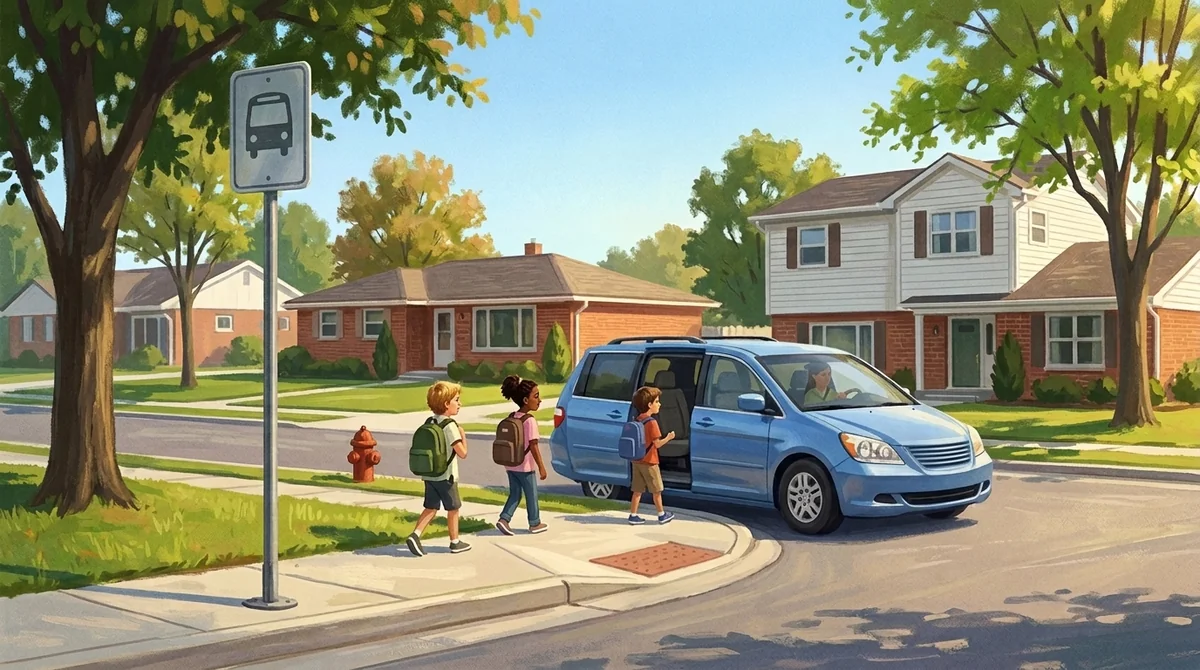
What changed, district by district
| District | State | What changed for 2026-27 | Guide |
|---|---|---|---|
| EVIT (East Valley Institute of Technology) | Arizona | No EVIT bus for the AM 4-hour block from any district. Windstar buses serve seven districts, by waitlist. | EVIT transportation |
| Kyrene | Arizona | Shared bus stops up to a mile from home, and three schools closed. | Kyrene |
| Marana Unified | Arizona | 23 Altar Valley stops cut for Marana High students; two remain. | Marana Unified |
| Payson Unified | Arizona | In-town routes cut; outlying areas only. | Payson Unified |
| Chicago Public Schools | Illinois | No guaranteed bus for general education students in magnet and selective programs; hub stops and Ventra cards instead. | Chicago Public Schools |
| JCPS (Louisville) | Kentucky | Most magnet and traditional students still have no bus, and the city's TARC network dropped five high schools. | JCPS |
| Lincoln Public Schools | Nebraska | Buses only beyond 4 miles, and 128 routes against the 150 the district wants. | Lincoln Public Schools |
| Columbus City Schools | Ohio | No bus for K-8 students at most lottery schools; 75 fewer routes. | Columbus City Schools |
| Tallmadge City Schools | Ohio | No high school bus, and no K-8 bus inside two miles. | Tallmadge City Schools |
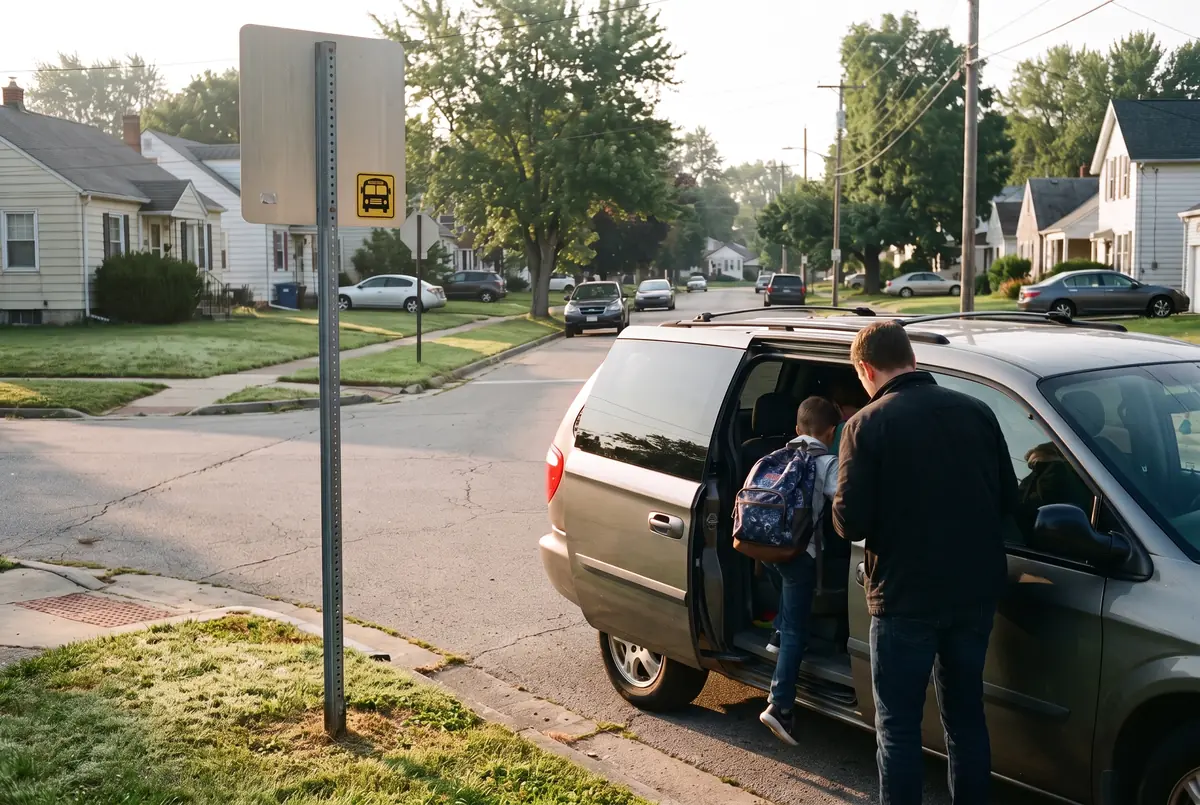
The plan, in order
Read the actual rule, not the rumor
Find your district's own transportation page and get four answers: which grades and schools are eligible; the distance, and how it's measured (a straight line from the school can be much shorter than the drive); the exceptions (an IEP that lists transportation almost always counts); and the deadline to request a stop. Write down the transportation office's phone number while you're there.
Ask before you assume
Districts review cases they don't advertise: a busy road with no safe crossing, a child placed at a school for the district's reasons, a sibling who already rides. The answer may still be no, but it costs one phone call.
Check transit honestly
For a teenager in a city, transit can be the answer. For a 7-year-old, it isn't, and the families who lose the bus are mostly the ones whose kids can't ride alone.
Find families going your way
The family next door may be at a different school. Start with the people already making your trip: the school's parent group, the families at your bus stop or hub, the parents at the same practice. Post three things: your neighborhood, the drop-off time, and the days you can drive. "Northside, 7:45, Mondays and Wednesdays" gets answers. "Anyone want to carpool?" doesn't.
Split the days
Fixed days are easier to remember than a rotation: each family takes the same day every week. If the days don't divide evenly, fix the ones that do and rotate the rest. A free printable carpool schedule (no account needed) is a good place to start, and How to Split Driving Duties Fairly covers the options.
Agree on these before the first drive
| What to agree | Where it lives once you've agreed |
|---|---|
| Who drives which days. | The shared week shows the driver for each drop-off and pickup, on every family's phone. |
| Sick days. Riders tell the driver by a set time. | Mark the rider "not riding" for that day. The driver sees it on the schedule. |
| A driver who can't make it. They tell the group by a set time the night before. | Swap the day with another family. If nobody is on it by the evening before, the whole carpool gets an alert. |
| Gas. Trade days evenly and nobody pays, or riders pay a set amount each week. | In your group text. The app doesn't handle money. |
| The pickup spot. One corner, written down. | Pinned in your group text. |
| Bad weather. Whose car takes the walkers when it snows or it's 110 degrees. | Swap the day, and every family sees the change. |
More on sick days in How to Handle Carpool No-Shows.
Plan next year now
Bus rules change every school year, and the decisions get made months ahead: lottery applications in January, school tax votes in November, closures announced a year out. Find your carpool before you commit to a school, not after.
Teen drivers: the passenger rule in each state
Before a new driver becomes the carpool, check the limit. These are the rules in the five states on this page.
| State | How long the limit lasts | Passenger limit | Who doesn't count | Law |
|---|---|---|---|---|
| Arizona | First 6 months with the license (ends at 18) | One passenger under 18 | Siblings. No limit with a licensed parent or guardian in the seat beside the driver. | A.R.S. 28-3174 (opens in a new tab) |
| Illinois | First 12 months, or until 18 if sooner | One passenger under 20 | Siblings, step-siblings, and the driver's children or stepchildren. | 625 ILCS 5/6-107 (opens in a new tab) |
| Kentucky | While on an intermediate license and under 18 | One unrelated passenger under 20 | Relatives. A driving instructor in the car lifts the limit; a parent doesn't. | KRS 186.452 (opens in a new tab) |
| Nebraska | First 6 months of a provisional operator's permit | One passenger under 19 who isn't immediate family | Immediate family. | Neb. Rev. Stat. 60-4,120.01 (opens in a new tab) |
| Ohio | First 12 months of a probationary license (under 18) | One passenger who isn't a family member, at any age | Family members. No limit with a parent, guardian or custodian in the car. | Ohio Revised Code 4507.071 (opens in a new tab) |
Each statute read October 15, 2026. Your state isn't here? Check your state's driver licensing agency before a new driver carries friends. More in Carpool Safety Tips for Parents.
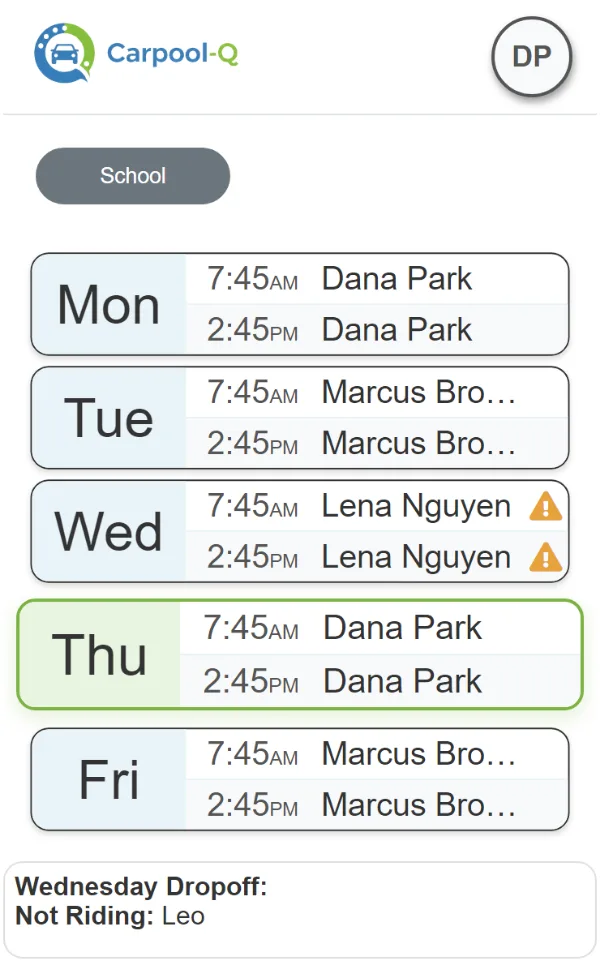
Once the families have said yes, put the week where all of them can see it.
- One shared week on every family's phone, with a driver for each drop-off and pickup.
- Mark a rider "not riding" for a day, or swap a day, and every family sees it.
- If tomorrow has no driver, the whole carpool gets an alert the evening before.
Each family starts with 14 days free. You invite the others by email or a text from the app.


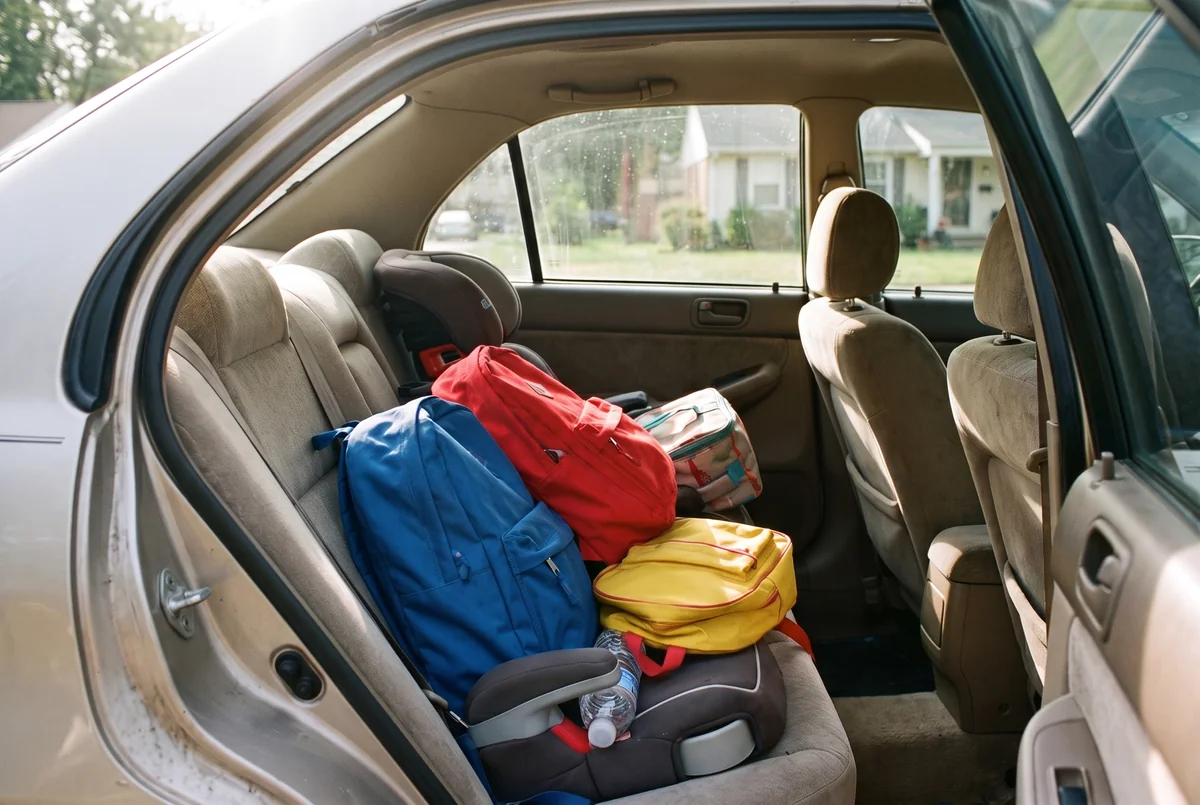
Each family has its own account: 14 days free, then $1.99 a month per family. You invite the other families by email or a text from the app.
Not ready for an app? Get the free printable carpool schedule (no account needed).
Carpool-Q is not affiliated with any school district. Each district guide links its sources and was checked October 15, 2026, for the 2026-27 school year. Next check: July 2027.