Jump to a section
Parents ask some version of this every school year, usually the month the oldest kids on the team turn 16.
Your younger child rides to practice with older teammates. It's half an hour each way, mostly freeway. Then one of the older kids gets a license, and their name lands on the driving schedule a couple of days a week: several kids in the car, no adult.
You're uneasy. Maybe the other parent in your house isn't. Before you argue it out, check what your state's teen license rules allow.
Start With the Law, Not the Argument
The law turns a question about feelings into one with an answer. It also gives you a no that isn't about the teenager or their parents. "It's not legal yet" is a sentence nobody has to take personally.
In Arizona, for a brand-new driver, the arrangement above isn't allowed.
What Arizona Says (as of October 2026)
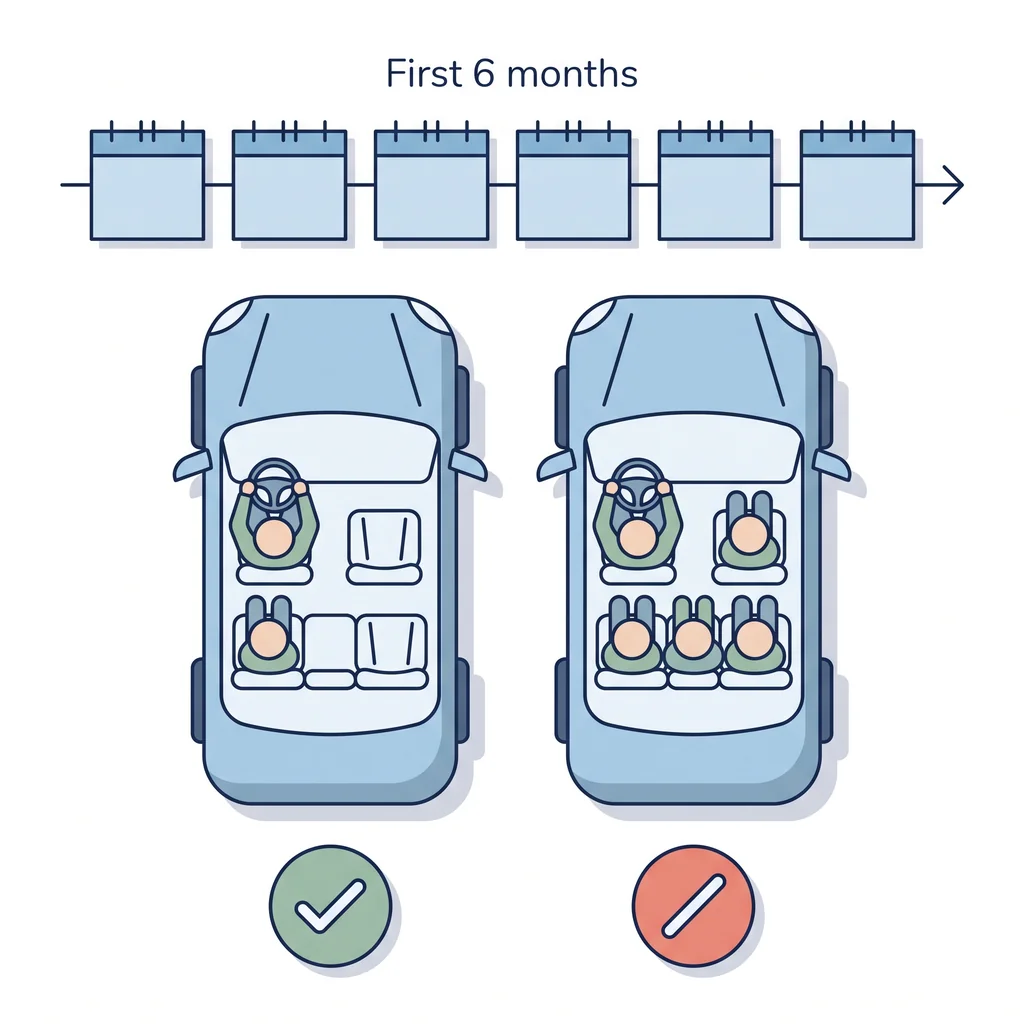
The rules are in ARS 28-3174. Drivers under 18 hold a Class G license, available from age 16. For the first six months with it:
- One passenger under 18, maximum.
- Two exceptions: the passengers are the driver's own siblings, or a parent or legal guardian with a regular driver license is in the car.
- No driving from midnight to 5 a.m., except for school-sponsored activities, work, religious activities and family emergencies.
- Penalties: a first violation means a civil penalty of up to $75 and 30 more days of restrictions. A second adds 60 days. A third means a 30-day suspension.
Six Months Is a Legal Line, Not a Readiness Test
Here's the trap. The restriction ends on a date, and the date tells you nothing about the driver.
The Insurance Institute for Highway Safety (IIHS) reports that teen drivers crash at more than four times the rate of drivers 20 and older, mile for mile. Passengers make it worse: they raise a teen driver's crash risk, while they lower it for drivers 30 and over. A full back seat is the exact condition the six-month rule exists for. The rule expiring doesn't make the risk expire.
Plenty of parents of new drivers wouldn't let their own teen make a daily freeway run solo, let alone with passengers. You can hold the same line for yours.
If You're Open to It After Six Months

Some families decide a careful older teen is a fine driver once the six months are up. If so, make it a yes with conditions.
- Talk to the driver's parents first. They know how their teen drives, and it's their car.
- Agree the specifics. The route, and whether it includes the freeway. How many passengers. Phones out of reach while moving.
- Talk to your own child. Name what unsafe driving looks like (speeding, a phone in hand, showing off for the back seat). Tell them they can call you from practice any time and you'll come, no questions on the drive home.
- Start small. A short local run before a daily freeway trip.
If the Answer Is No
Say it once, plainly, and offer something in its place.
In the first six months, the law does the work: "In Arizona, a new driver can only take one passenger under 18 for six months." After that, it's a family rule, and you can say so: "Our kids ride with adult drivers for now. I'll take that slot."
Taking the slot yourself is what keeps it from sounding like criticism. You're not asking another family to cover your decision. You're covering it.
If You're Not in Arizona
Every state sets its own passenger limits and time periods. Don't assume Arizona's numbers apply where you live; read your state's statute or its motor vehicle department's page.
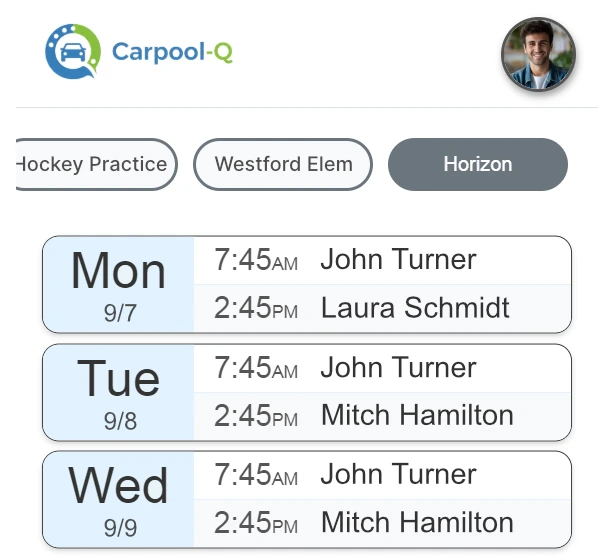
Whatever you decide, put it on the schedule so nobody finds out at pickup. In Carpool-Q, every slot shows who's driving, so every family sees a new driver's turn before the day comes.
The legal summary above reflects Arizona statute as of October 2026. It is general information, not legal advice.