It's 9:17 PM on a Tuesday. You're winding down, maybe already in bed, and your phone lights up. It's the carpool group chat.
"Hey — quick question, who's driving tomorrow?"And just like that, you're not winding down anymore. You're scrolling back through weeks of messages trying to figure out whose turn it is, wondering if you're the one who forgot, hoping someone else responds first.
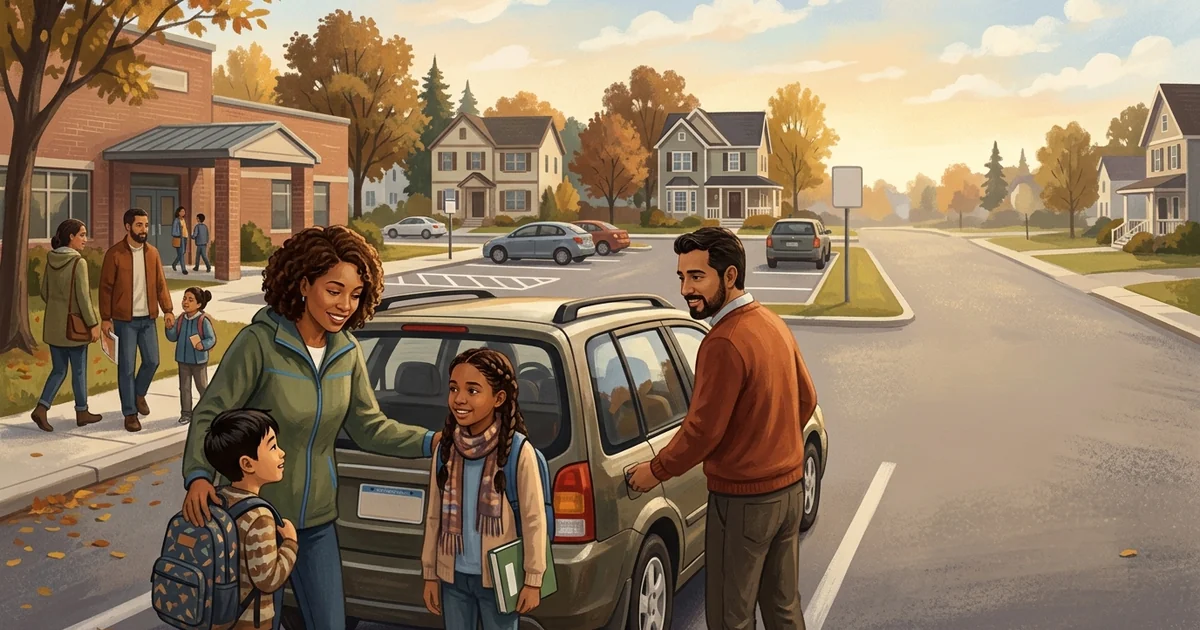
Nobody in that chat signed up for this. Not the person who asked, not the person who has to answer, and definitely not the person who is, it turns out, supposed to drive tomorrow and somehow didn't know.
This is one of the most universal small-scale frustrations in family life. And it is completely, entirely, preventable.
Why the Question Keeps Getting Asked
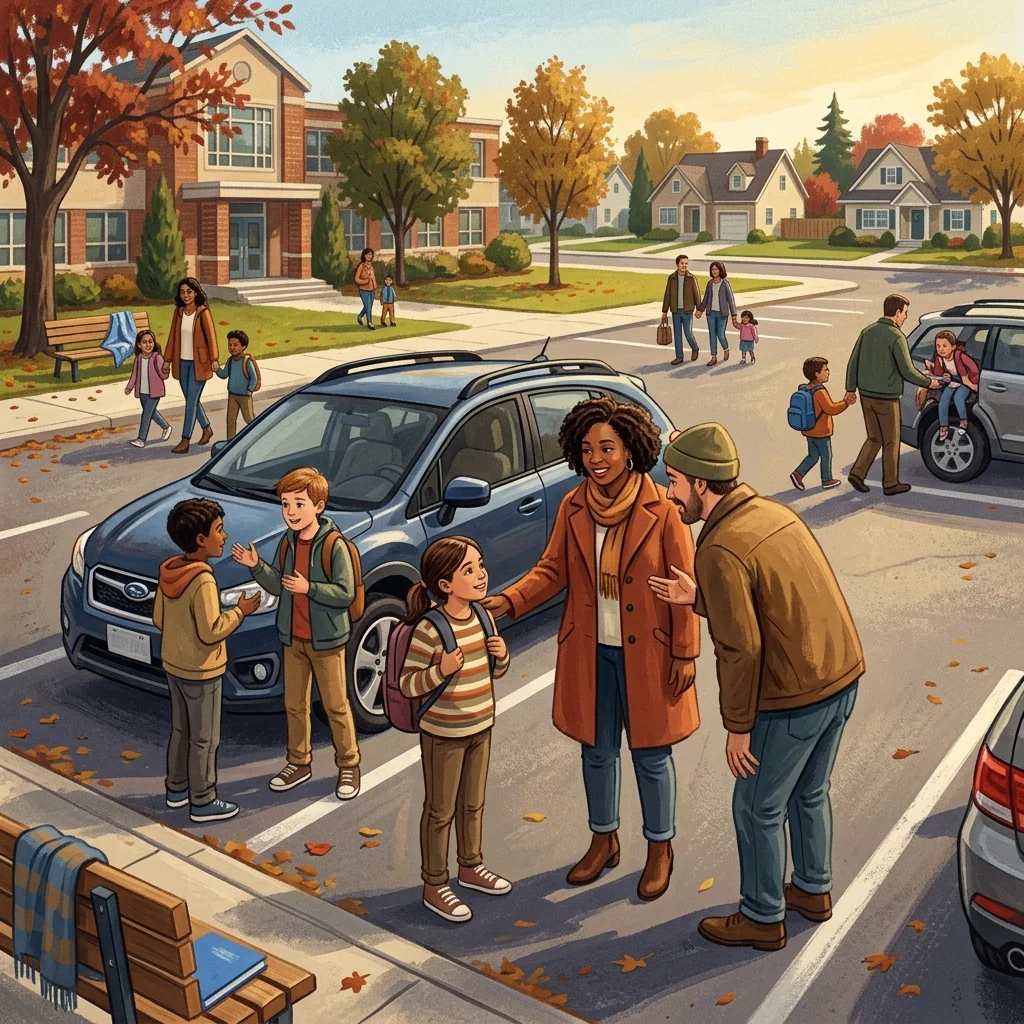
The "who's driving tomorrow?" text is a symptom. The disease is a carpool schedule that doesn't actually exist anywhere everyone can see it.
Most carpools start the same way. A few parents agree to a rotation over text. It makes sense in the moment: "I'll do Monday, you do Tuesday, Sarah does Wednesday and Thursday." Everyone nods. The arrangement begins.
Two weeks later, nobody can remember if they agreed to switch around the upcoming holiday. Three weeks later, the text arrives.
This happens for entirely predictable reasons.
The Rotation Lives in Everyone's Head

When a carpool schedule exists only as a memory, it degrades quickly. People forget whether it's a regular week or a modified week. They forget the exceptions that were agreed to verbally. They forget whether they drove last Monday or the Monday before. Memory is a terrible scheduling system, and we keep asking it to do scheduling work.
Group Texts Are a Terrible Archive
The average carpool group text is a mix of schedule logistics, random life updates, pictures of kids, reaction emojis, and the occasional message from someone who clearly meant to send it somewhere else. Finding a relevant message from three weeks ago is not a reasonable ask.
More importantly, a group text can't hold a schedule. You can type the schedule into a group text, but it's not dynamic. It doesn't update when someone can't make it. It doesn't remind anyone of anything. It just sits there, getting buried under subsequent messages, becoming less and less reliable as time passes.
Nobody Owns the Schedule
In most ad hoc carpools, the schedule is a shared fiction — everyone believes it exists somewhere, but it doesn't actually live anywhere. There's no single source of truth that everyone can check independently. So when doubt arises, the only resolution mechanism is to ask the group.
What Actually Fixes It
The fix is not more communication. The fix is less necessary communication — which requires that the information be accessible without asking.
A persistent, shared schedule that everyone in the carpool can see, from any device, at any time, solves the root problem. When the schedule is always available and always current, "who's driving tomorrow?" has an answer that doesn't require bothering anyone at 9 PM.
The Schedule Has to Be Visible to Everyone
Not just the person who created it. Not just the person whose turn it is. Everyone. On their phone, updated in real time, reflecting any changes that have been made since the last time they checked.
This sounds obvious, but it's the step most carpools skip. The schedule gets created, shared once, and then maintained informally — which means it gradually diverges from reality until nobody trusts it.
A good carpool schedule is a living document. Someone swaps a day? The schedule updates. Someone can't make Friday? The schedule reflects it. The group doesn't have to be notified every time — they just check the schedule when they want to know.
Changes Have to Be Easy to Make
A schedule that's painful to update is a schedule that stops getting updated. Spreadsheets seem like a good idea until someone forgets the link. Shared calendar events are better, but updating them requires everyone to be using the same calendar system, and carpool families rarely are.
The update mechanism has to be as simple as possible: open an app, change something, done. The rest of the group sees the change automatically. No forwarding, no screenshotting, no texting the update to three people separately.
Reminders Should Be Automatic
Even with a perfect shared schedule, people forget. Not because they're irresponsible — because everyone is managing more simultaneous responsibilities than any human brain is designed to track smoothly.
Automated reminders solve this. The night before a driving day, the driver gets a notification. Not a text from another parent, not a message in the group chat — a targeted notification to the person who actually needs to know. The reminder is specific ("You're driving tomorrow morning — pickup at 7:45 AM") and it arrives without requiring anyone else to remember to send it.
This is the piece that makes the "who's driving tomorrow?" question truly disappear. The driver already knows, because they were reminded. The other families already know, because they checked the schedule. The question never needed to be asked.
How Carpool-Q Handles This
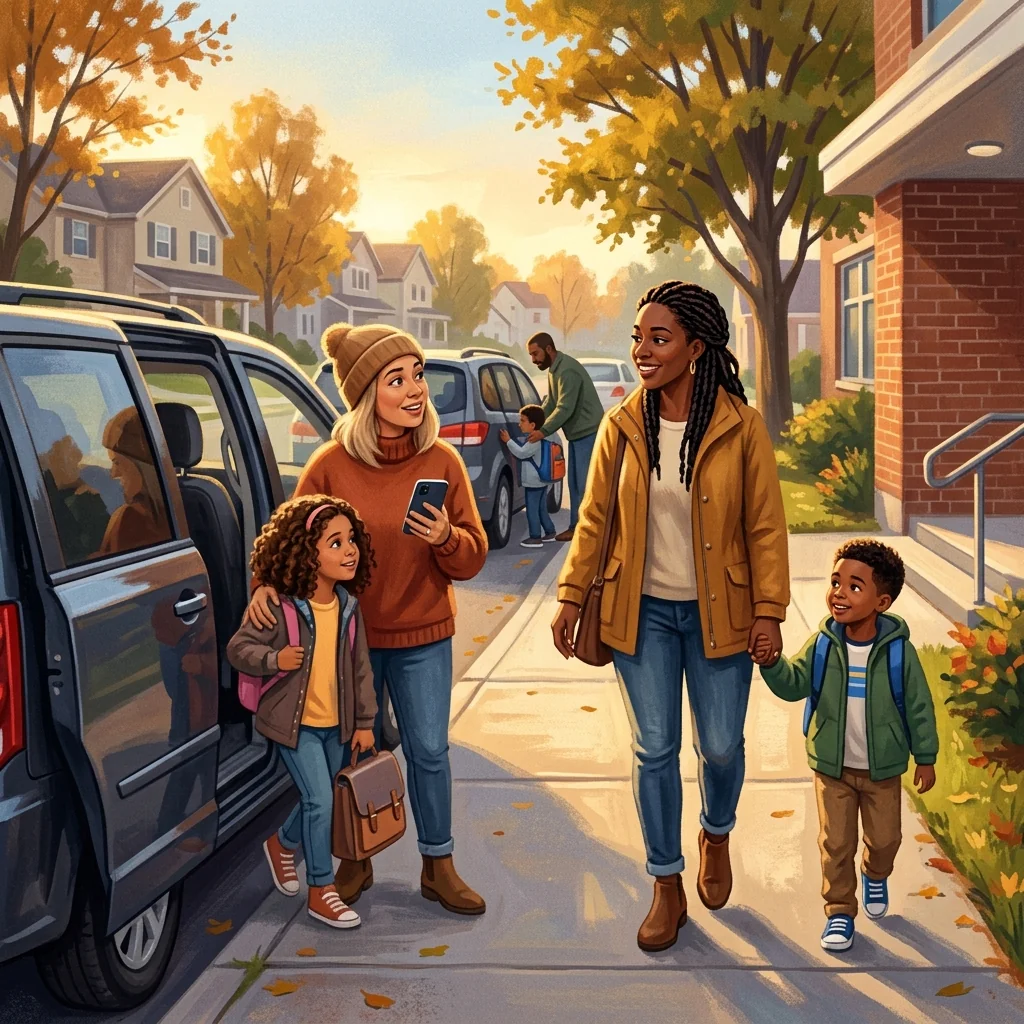
This is exactly the problem Carpool-Q was built to solve. The app gives every carpool a shared schedule that all members can see in real time. When a driver is assigned to a day, everyone in the carpool can see it. When someone needs to swap, they update the app and the change is immediately visible to the whole group.
Reminders go out automatically to drivers before their assigned days — no manual prompting, no group-chat check-ins, no night-before panic. The system holds the schedule so the parents don't have to.
Setting it up takes about five minutes. The first week it runs, someone in the group will probably say some version of "wait, this is it? We just... check the app?" Yes. That's it. That's the whole thing.
The question doesn't go away because people get better at remembering. It goes away because the system makes remembering unnecessary.
The Ripple Effects of a Working Schedule
When the carpool has a reliable shared schedule, something interesting happens: the group chat gets quieter. Not because people stop talking — because the logistics don't require talking anymore. The messages that remain are the ones people actually want to send.
The reduction in friction also makes the whole arrangement more stable. Carpools fall apart when the coordination overhead gets too high — when it feels like more work than just driving yourself. A clean, low-friction system keeps the arrangement feeling effortless, which keeps everyone participating.
Parents who might have dropped out after a frustrating month of "who's driving?" texts stay in because the carpool actually works the way they imagined it would when they agreed to it.
Making the Switch From Group Text to App
If your carpool currently runs on a group text and you want to move it to a proper schedule, here's how to do it without making it feel like a production.
Start with the proposal, not the setup. Text the group: "Hey, I found an app that handles the schedule automatically and sends reminders. Want to try it? Takes five minutes." Most groups will say yes. Do the initial setup yourself. Don't ask everyone to configure something at the same time. Set up the carpool in Carpool-Q, enter the schedule, and invite everyone. They click a link, join, and they're in. Run it alongside the group text for one week. Let people get used to checking the app. After a week, someone will reference the app schedule in a conversation and the transition will have already happened. Point to the app when the question comes up. The first time someone asks "who's driving tomorrow?" after the migration, reply with "It's in the app!" That one exchange usually converts the last holdout.Frequently Asked Questions
What if someone in the group refuses to use an app? It happens. One person can check the app on behalf of someone else and relay information when needed. The schedule still exists and is still reliable; one member just has a slightly different access method. This is not ideal, but it's better than no schedule. What if driving assignments change frequently because of unpredictable schedules? Frequent changes are actually a reason to use an app, not a reason to avoid one. Updating a shared app is much cleaner than sending a series of "actually, can someone swap Wednesday?" texts and hoping everyone sees them. How far in advance do we need to set the schedule? Setting a week at a time works well for most carpools. Some groups prefer to set a full month. The more predictable the rotation, the further in advance you can schedule — and the further in advance reminders can go out. What if there's a last-minute change the morning of? Carpool-Q sends notifications when schedule changes are made, so a morning change reaches everyone immediately. This is significantly faster and more reliable than a group text, where messages can get lost or arrive out of order. Can we still use the group chat for non-logistics stuff? Absolutely. Moving the schedule to an app doesn't mean retiring the group chat. It just means the group chat isn't responsible for maintaining the schedule anymore, which frees it up for actual conversation.The Last Time You'll Ask
Your carpool group doesn't need to be better at communicating. It needs a system that makes most of the communication unnecessary.
A shared schedule that's always current, combined with automatic reminders that reach the right person at the right time, means the "who's driving tomorrow?" text becomes a thing of the past — not because everyone suddenly got more organized, but because the answer is already there.
Set up your carpool schedule at carpoolq.com and send the last "who's driving?" text you'll ever need to send.