Ask any parent why they started carpooling and the answer is almost always practical: it saves money, cuts down on driving, or makes the morning rush more manageable. Those are real benefits, and they matter. But ask them six months in why they keep doing it — why they'd never go back to solo drop-offs — and the answer gets a lot more interesting.
The families who stick with carpooling long-term aren't doing it because of the gas savings. They're doing it because of what happens in the margins: the friendships that form in back seats, the neighborhood connections that appear out of nowhere, the quiet relief of knowing someone else has your back when life gets complicated. The fuel savings are nice. The community is irreplaceable.
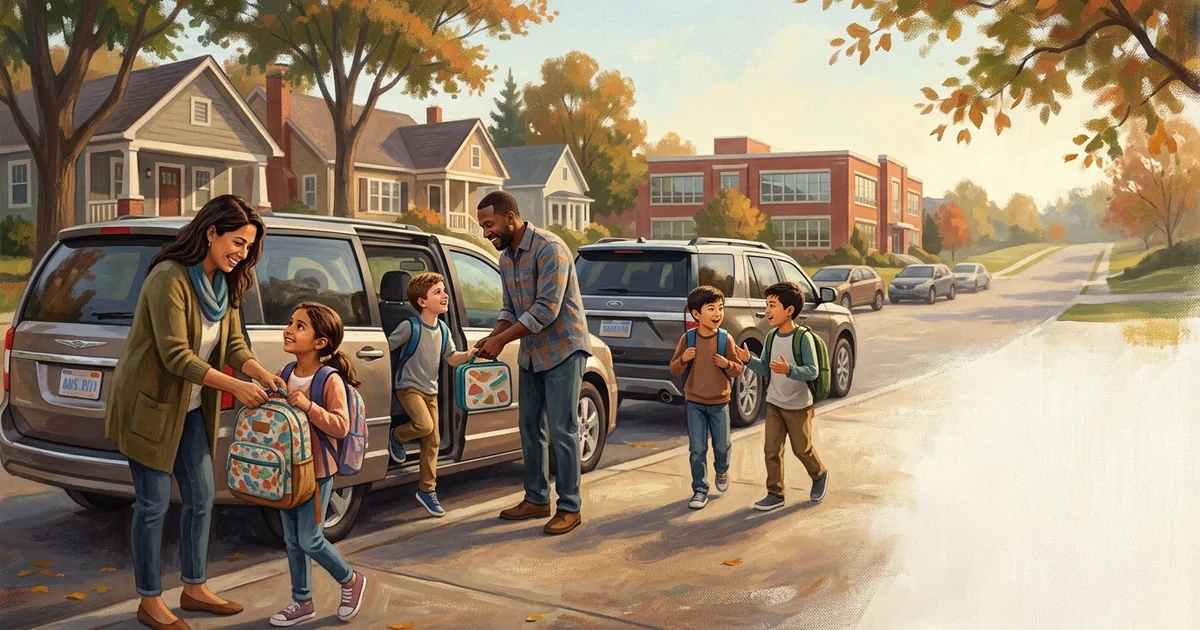
This article is about those second-order benefits — the ones nobody puts on a flyer but everyone eventually discovers. If you've been on the fence about carpooling, or if you're already doing it and want to understand why it feels like more than a logistics arrangement, read on.
It Builds Real Friendships (For Kids and Adults Alike)
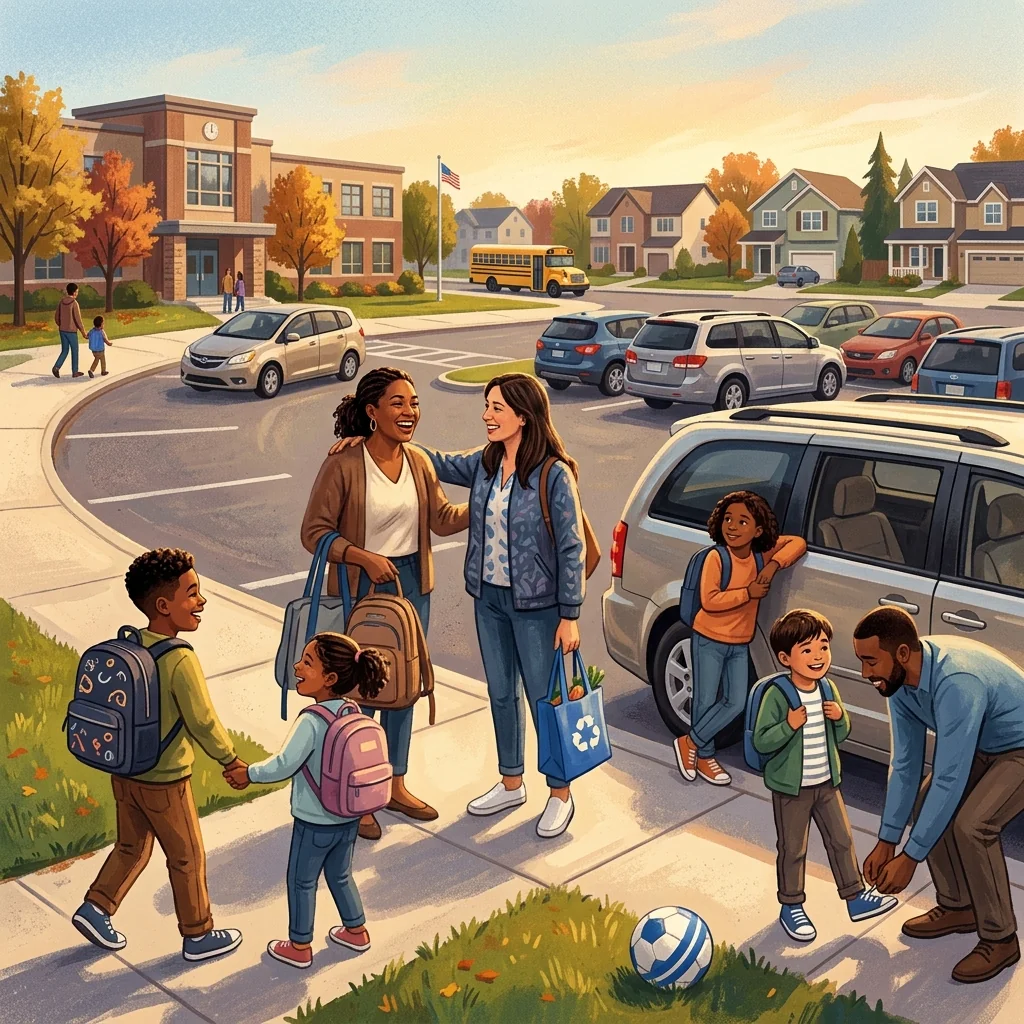
There is something particular about the car as a social space. It's enclosed, slightly private, and mostly free of screens — at least for the driver. For kids, twenty minutes in the back seat with the same two or three friends several times a week becomes a kind of ritual. They have inside jokes that started in that car. They talk about things they'd never bring up at the lunch table.
Developmental psychologists have long noted that children form deeper friendships through repeated, low-stakes contact — not organized playdates, but the kind of incidental togetherness that used to happen naturally in neighborhoods where kids could roam. The school carpool recreates that. It's not a playdate with an agenda. It's just time, together, going somewhere.
For adults, the dynamic is quieter but just as real. The parent you wave to in the pickup line once a week becomes the person you actually talk to when you're both driving on alternating Tuesdays. You learn their names. You hear about their job changes and their older kids' college decisions. Carpooling turns acquaintances into neighbors in the fullest sense of the word.
It Reduces School Traffic — and That's Bigger Than You Think
On any given school morning, a significant percentage of cars idling outside an elementary school contain a single child. If five families in a neighborhood carpool instead of driving separately, that's potentially eight or nine fewer cars on the road during the fifteen-minute window around bell time.
Multiply that by a few dozen participating families and the effect is visible. Drop-off lines move faster. Residential streets near schools are less congested. The crosswalk becomes less of a gamble. These aren't abstract benefits — they're felt immediately by every family, whether they're carpooling or not.
Some schools have begun actively encouraging carpool formation for exactly this reason. Fewer cars means less idling, which means better air quality in the immediate vicinity of the school — which matters enormously given that children's lungs are still developing and they're breathing that air every single day.
Your decision to carpool is not just a personal logistics choice. It's a small but genuine contribution to your school's environment and your neighborhood's livability.
The Environmental Impact Adds Up Faster Than You'd Expect
The math on carpool emissions is straightforward and slightly startling. A typical school run of three miles each way, five days a week, forty weeks a year adds up to roughly 1,200 miles of driving annually. If four families share that route, each family eliminates 900 miles of solo driving per year.
In carbon terms, that's somewhere between 300 and 450 kilograms of CO2 depending on vehicle type — roughly equivalent to planting twenty to thirty trees, or not flying round-trip from Phoenix to San Francisco. Not transformative on its own, but meaningful, and it compounds when you consider the entire neighborhood.
For families who care about climate and want to do something concrete beyond changing lightbulbs, carpooling is one of the highest-impact behavioral changes available. It doesn't require buying a new car or installing anything. It just requires coordination — which is exactly the problem apps like Carpool-Q are built to solve.
It's Genuinely Better for Kids' Mental Health
This one surprises people, but the evidence is fairly consistent. Children who commute to school with peers — rather than alone with a parent or in silence — arrive in better moods and report lower anxiety about the school day. The social warm-up of the car ride functions as a kind of decompression chamber between home and school.
For kids who struggle with social anxiety, the carpool can actually be therapeutic in low doses. It's a small, familiar group. There's a defined endpoint. Nobody is expected to perform. Over weeks and months, shy kids find their footing in that context in ways that generalize to the broader social environment of school.
There's also something to be said for the absence of parental scrutiny. When a parent is driving a mixed group of kids, the conversation in the back seat has a different quality than it does on a one-on-one drive home. Kids are more themselves. They're funnier, more relaxed, more likely to talk about things that actually matter to them.
Adults Are Less Stressed, Too
The mental load of parenthood is enormous, and a disproportionate share of it falls on whoever is handling school logistics. The carpool distributes that load in a way that is felt almost immediately.
On days when it's not your turn to drive, you get back something rare: uninterrupted time. Not a lot of it — thirty or forty minutes — but enough to take a call, start a load of laundry, or simply sit with a cup of coffee before the day begins in earnest. Parents who carpool consistently report that their mornings feel less frantic, not just less busy.
There's also the stress reduction that comes from not being solely responsible for every drop-off and pickup. When the weight of "getting the kids there" is shared with other adults you trust, a particular kind of low-grade anxiety lifts. It's not something you notice until it's gone.
You're Building an Emergency Backup Network
This is the benefit that parents only appreciate after they actually need it, which is why it should be stated plainly upfront: a carpool is also an emergency network.
When you're stuck in a meeting that runs long, when your car won't start, when you're sick and can't get out of bed — the carpool is already there. You don't have to make a series of frantic calls to figure out who might possibly be available. You already have a relationship with two or three families who are going in the same direction. You just text the group.
This reciprocity is one of the most underappreciated aspects of carpooling. It turns a transactional arrangement — "I drive Tuesdays, you drive Thursdays" — into genuine mutual aid. And because the favors are small and regular, asking for one when you need it doesn't feel like an imposition.
It Creates Neighborhood Identity
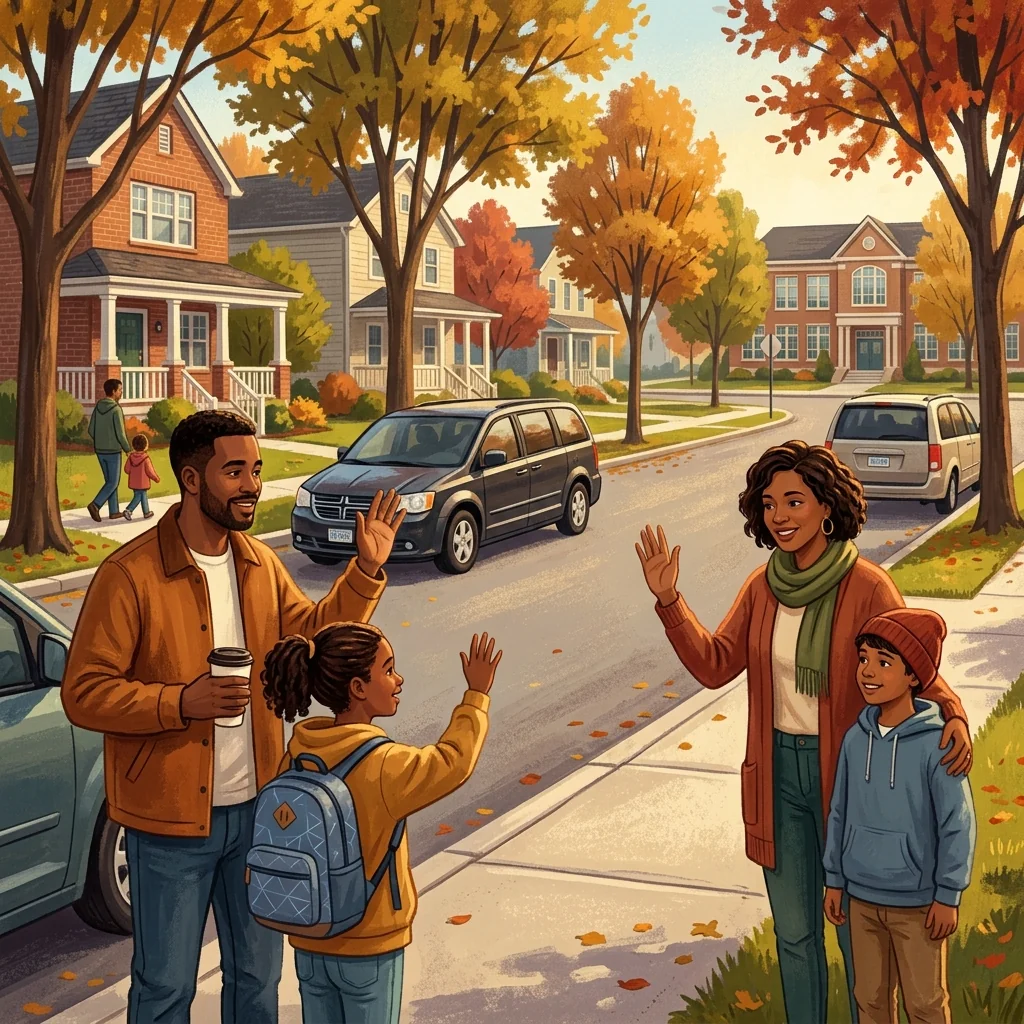
Neighborhoods in American suburbs often lack the organic community feel of older, denser places. Families live close together geographically but barely interact. Carpooling quietly pushes back against that.
When four or five families are regularly coordinating — texting about schedule changes, waving to each other in driveways, occasionally having an awkward but pleasant conversation at pickup — something shifts. There's a sense of shared endeavor, of looking out for each other's kids. Block parties feel less strange when you already know people's names.
Some of the strongest neighborhood friendships form entirely through carpool logistics. The relationship starts functional and becomes something warmer over time, almost by accident. That's not a small thing in an era when many adults report that they don't know any of their neighbors.
Frequently Asked Questions
Do kids actually enjoy carpooling, or do they just tolerate it? Most kids, especially those who are already friends with the other kids in the carpool, genuinely enjoy it. The back-seat dynamic is social in a way that solo rides aren't. That said, every kid is different — for some, particularly introverted children, it may take a few weeks to warm up, and that's completely normal. What if the families in our carpool have very different schedules? This is the most common practical challenge, and it's solvable with a good coordination system. Apps like Carpool-Q let every family see the week's schedule at a glance and flag days when they need coverage, so differences in availability don't have to derail the arrangement. How do I find families to carpool with in the first place? Start with families you already know from school: class parents, families from your street, parents you see regularly at sports practice. School directories and neighborhood apps are also useful. If your school has a carpool board or a community Facebook group, that's a natural starting point. Is carpooling safe? I'm nervous about putting my kids in other people's cars. This is a completely reasonable concern. Getting to know the other drivers before the arrangement starts — ideally in person — helps a lot. Keeping the group small (two or three families) means you're only trusting a handful of people you've vetted yourself. Most parents find that their anxiety fades quickly once they've seen the routine in action. What if the carpool falls apart? Do we lose the friendships too? Rarely. The friendships formed through carpooling typically persist even when the arrangement changes — when kids move to different schools, when schedules shift, when families move. The relationship has its own momentum by that point.Ready to Try It?
The benefits of carpooling compound over time. The first week feels like a logistics project. By the third month, it feels like part of the neighborhood fabric.
Carpool-Q makes the coordination side effortless — shared schedules, automated reminders, and a clear view of who's driving when, so nobody ever has to send the "wait, who's picking up today?" text. Start your carpool at carpoolq.com and let the app handle the organizing while you focus on the community.