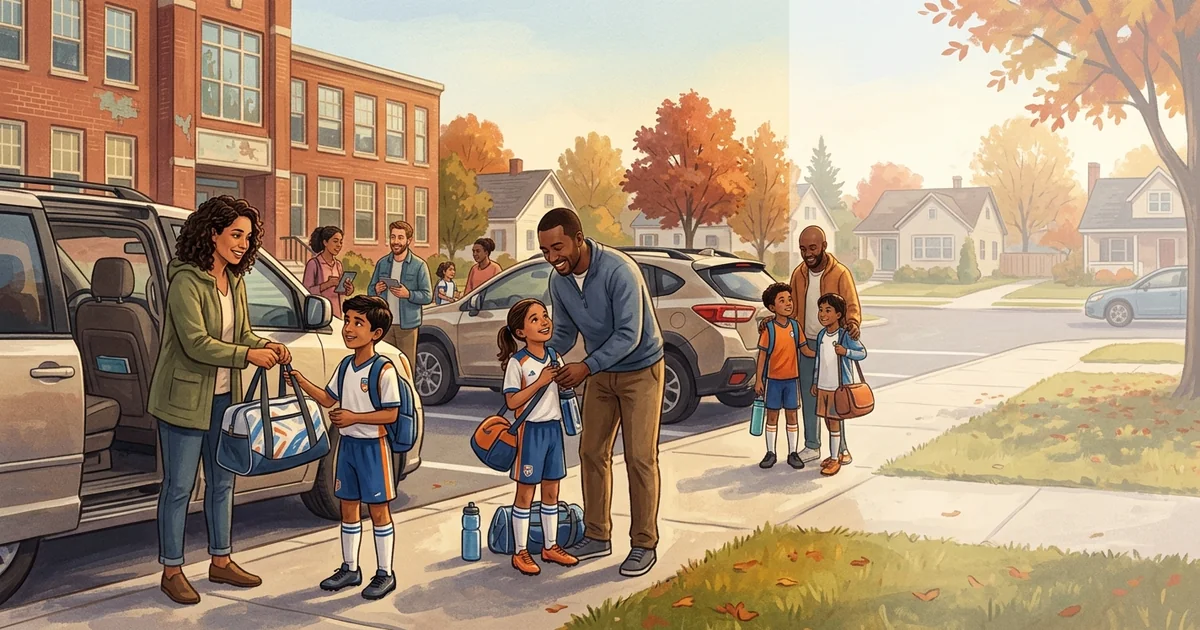
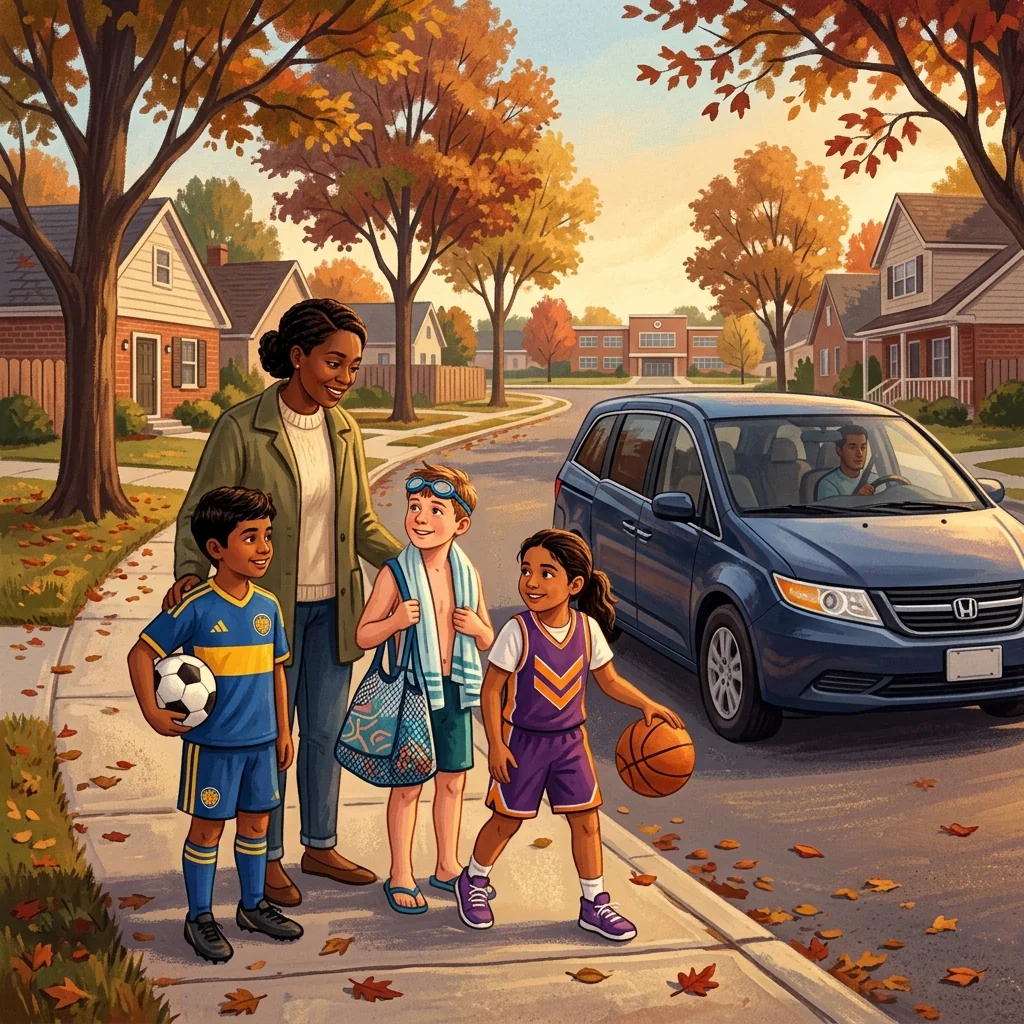
School carpools have it easy. Same time, same place, five days a week. Sports carpools? That's a different animal entirely. Practices are three days a week. Games move to different fields. The schedule changes when the league updates brackets. One kid has hockey and soccer on the same day. And everyone's hauling equipment.
Despite the complexity, a well-organized sports team carpool can save each family 4-6 hours of driving per week during the season. That's not a small number. That's the difference between watching your kid's game rested and watching it after two hours in traffic.
This guide covers everything specific to sports carpools — the challenges that school carpools don't face, and how to handle them.
Why Sports Carpools Are Harder (And Worth It)
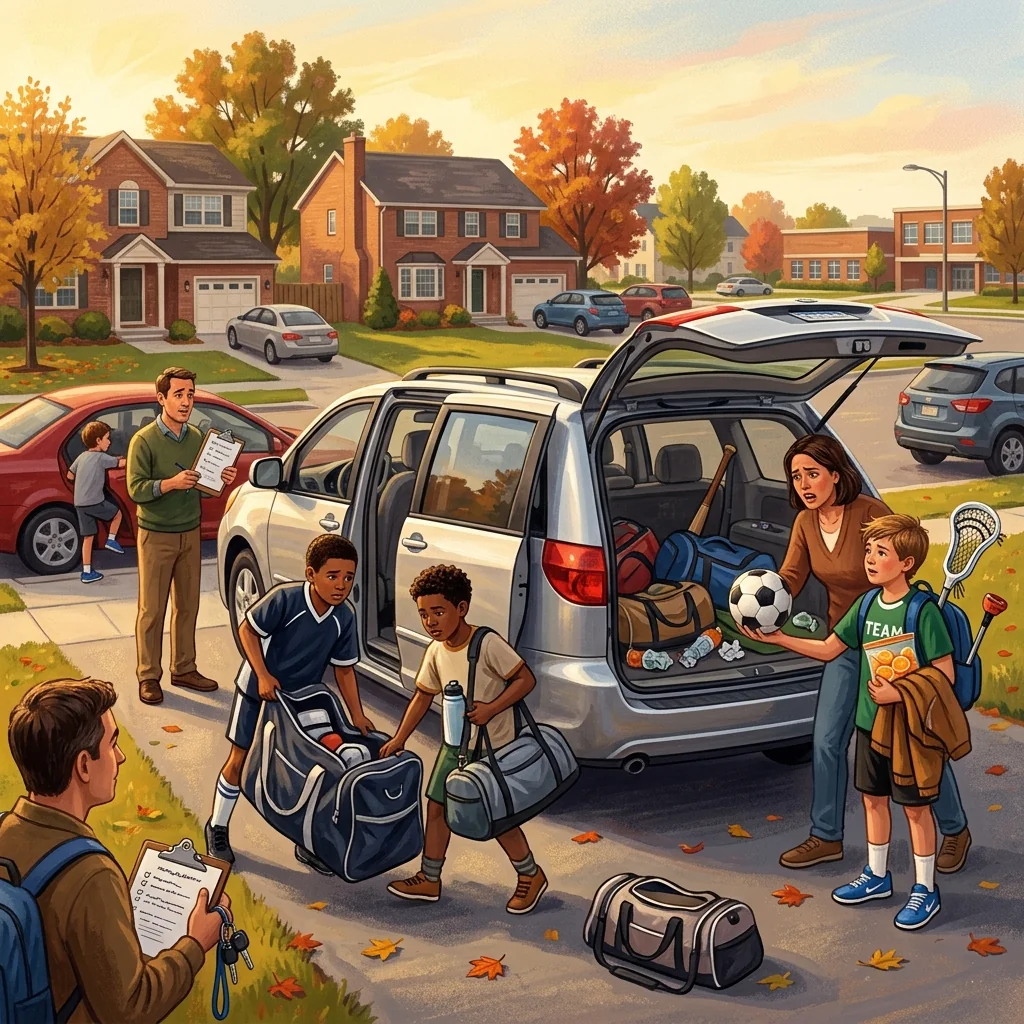
Let's be honest about why most sports carpools fail:
Irregular schedules. Practice is Tuesday, Thursday, and Saturday — except during tournament weeks, when it's Monday and Wednesday. And that one week where the coach added a Friday session. Multiple locations. Home games are at one field. Away games could be anywhere in the metro area. Tournaments might be across the county. Equipment. Hockey bags, swim gear, lacrosse sticks, soccer balls, water jugs. Not every car can fit four kids plus their equipment. Overlapping sports. Your child plays soccer and swims. Another family's kid does basketball and soccer. The schedules overlap in impossible ways. Season-based commitment. Sports seasons last 2-4 months, not the full school year. By the time everyone's comfortable with the carpool, the season ends.Despite all this, the families who figure out sports carpools become the most tight-knit groups on the team. You're sharing the load during the busiest, most exhausting part of parenting.
Step 1: Identify Your Carpool Candidates
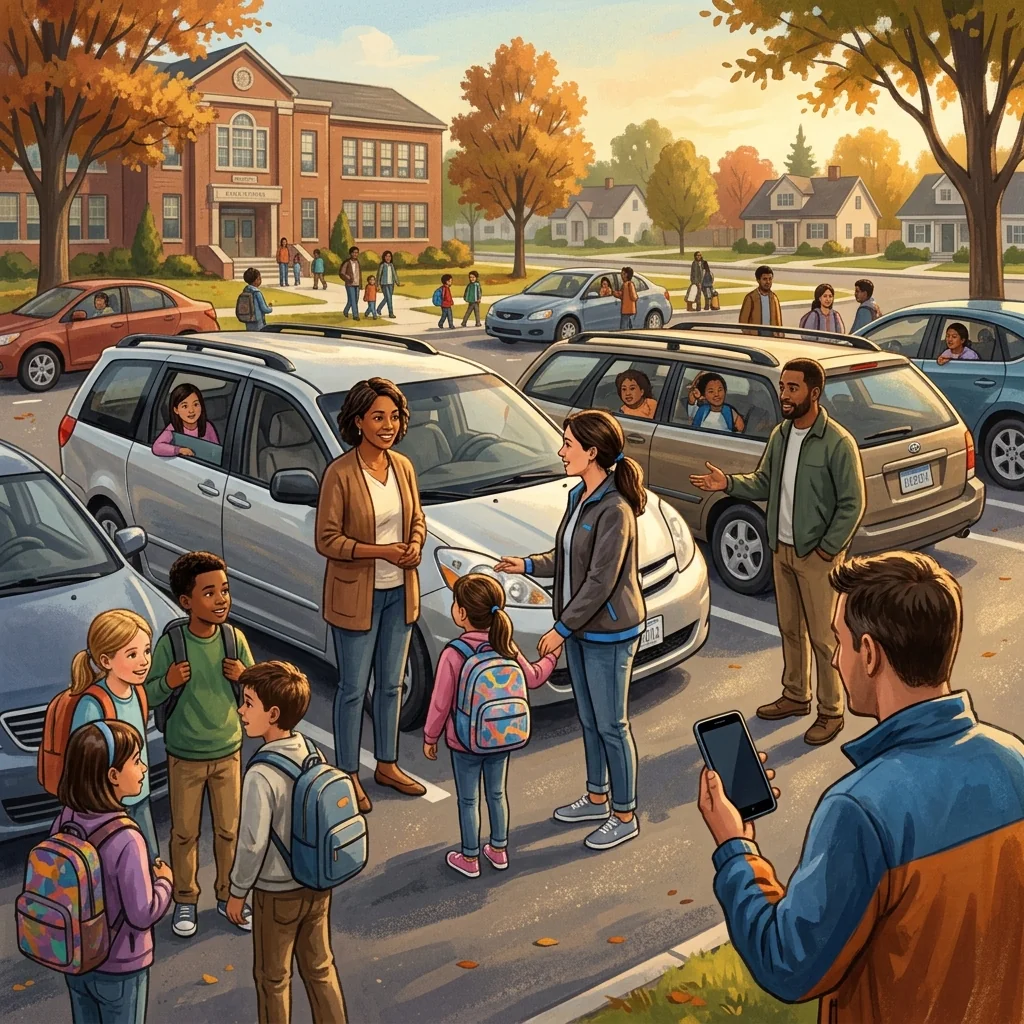
The best sports carpool partners share three things: geography, schedule, and commitment level.
Start with the team roster
Your coach or team manager probably has a contact list. Use it. Send a message to the whole team:
"Hey team parents — I'm looking to set up a carpool for [sport] practice/games. We live near [area/intersection]. If you're interested and live nearby, let me know. The more families, the less each of us drives."
You'll typically get 3-5 responses from a team of 12-15 kids. That's plenty.
Geography matters even more for sports
With school, everyone's going to the same building. With sports, you might have:
- Home practice at a field 15 minutes away
- Games at various facilities 20-45 minutes away
- Tournaments that are an hour drive
Ask the right questions
Before committing, ask each interested family:
- How many kids need rides?
- Can you drive? How many seats do you have (after car seats)?
- Are there any weeks you already know you can't participate?
- Does your child have any other sports/activities that might conflict?
- Can you handle equipment in your vehicle?
Step 2: Handle the Schedule Complexity
This is where sports carpools differ most from school carpools. You need a system that handles week-to-week variability.
Create a "default schedule" for practices
Even though the game schedule changes, practices are usually consistent. Set up your default rotation for practice days:
- Tuesday: Family A drives
- Thursday: Family B drives
- Saturday: Rotate between Families C and D
Handle games separately
Games require a different approach because locations change:
Option 1: Assign a "game day driver" each week. One family drives to whatever location the game is at. Rotate this responsibility weekly. Option 2: Caravan approach. Everyone drives to games, but you coordinate departure times so kids arriving without their parents have another family there. Option 3: Proximity-based. For away games, whoever lives closest to the game location drives that week. This minimizes total driving distance.For tournaments, the schedule is usually released a week in advance. That's when you coordinate — not the night before.
Use an app, not a spreadsheet
Sports schedules change too frequently for a static spreadsheet. By the time you've updated it, something else has changed. A real-time shared schedule — like Carpool-Q — lets any parent update the plan and everyone sees it instantly.
The key features for sports carpools:
- Multiple carpools — keep the practice carpool separate from the game carpool
- One-off trips — add extra practices or schedule changes without affecting the recurring rotation
- Push notifications — drivers get reminders, and everyone gets alerts when changes happen
Step 3: Solve the Equipment Problem
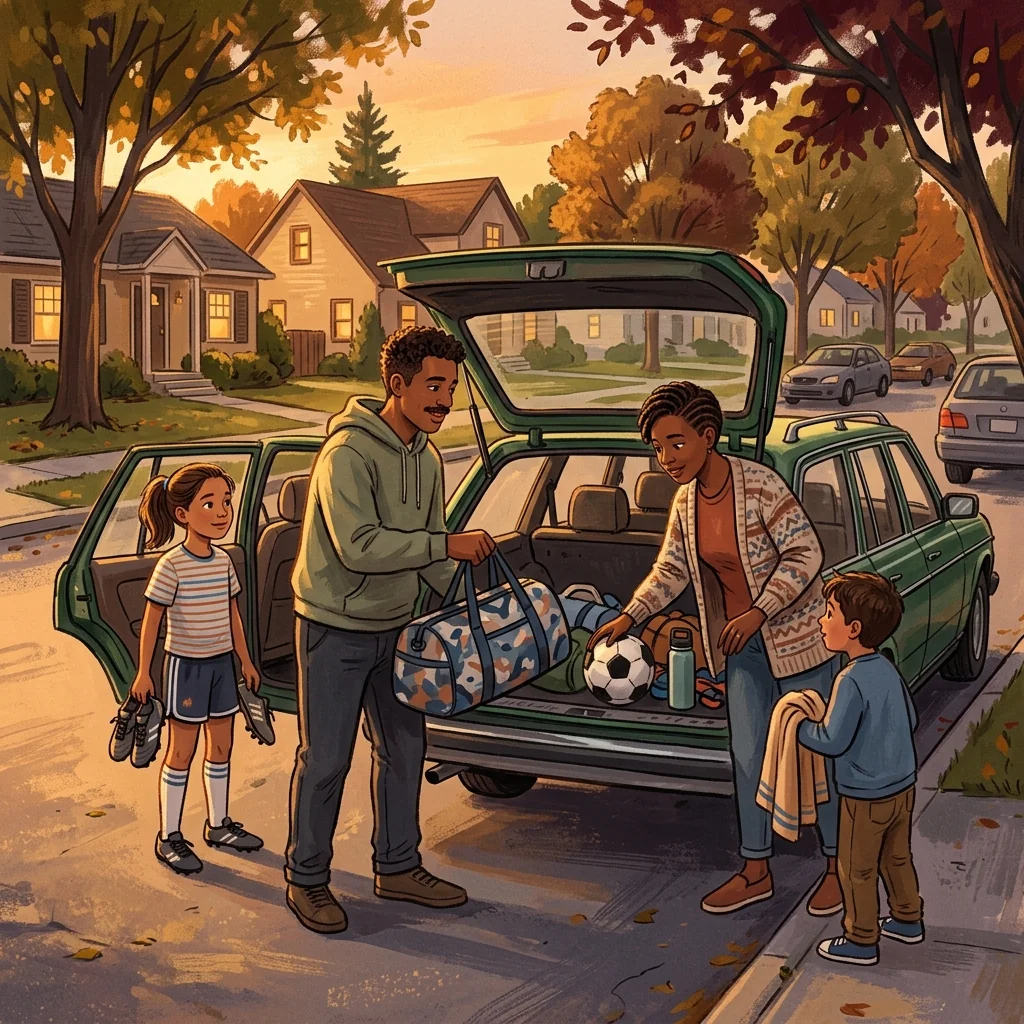
The equipment challenge is unique to sports carpools and catches people off guard.
Audit vehicle capacity
Before finalizing your carpool, each family should honestly assess:
- How many kids can they safely transport (with seatbelts)?
- How much trunk/cargo space do they have after equipment?
- Do they have a way to secure large equipment (hockey sticks, lacrosse sticks)?
| Sport | Equipment per kid | Vehicle impact |
| Soccer | Cleats, ball, shin guards, water | Minimal — fits in a backpack |
| Hockey | Full gear bag (large), stick | Significant — 1 bag fills half a trunk |
| Swimming | Swim bag, towel, goggles | Minimal |
| Lacrosse | Stick, helmet, pads, bag | Moderate — stick length is the issue |
| Baseball | Bat bag, helmet, glove | Moderate |
| Basketball | Shoes, ball | Minimal |
Strategies for equipment-heavy sports
Gear stays at the facility. Some rinks, fields, and clubs have storage lockers. If kids can leave their gear at the facility, the equipment problem disappears. Gear rotation. If gear can't stay at the facility, assign one family per week to transport the equipment separately. This family might drive their own kid plus the gear, while another family handles the other kids. Roof rack or cargo carrier. If you're regularly hauling 4 kids' worth of hockey gear, a temporary cargo carrier for the season is a worthwhile investment. Pre-pack the car. For your driving days, have your child load all gear the night before. Morning chaos plus gear loading plus multiple pickup stops is a recipe for forgotten equipment.Step 4: Communicate Effectively
Sports carpools generate more communication than school carpools because of the schedule variability. The key is structured communication that doesn't overwhelm.
Weekly check-in (Sunday evening)
One parent (or the carpool app) confirms the coming week's schedule:
- Who's driving to practice on which days
- Game day logistics (time, location, who's driving)
- Any known absences or changes
Change protocol
Things change constantly in youth sports. Establish a clear protocol:
- Practices: If practice is canceled, the coach or team manager notifies. Whoever was driving confirms with the carpool group.
- Games: Game time/location changes should be communicated as soon as known. Update the app immediately.
- Individual absences: If your child isn't going to practice, tell the group by 2pm the day of (at latest). The driver needs to know so they don't wait at your house.
What not to put in the carpool chat
Keep the carpool communication channel focused on logistics:
- ✅ "Practice moved to 4:30 this Thursday"
- ✅ "Emma isn't riding Tuesday — she's sick"
- ✅ "Game Saturday is at Riverside Field, not our usual"
- ❌ "Did you see the referee's call in the 3rd quarter??"
- ❌ "Does anyone have cleats in size 4 for sale?"
- ❌ Team social planning, fundraising, etc.
Step 5: Plan for the Full Season
Sports carpools are temporary by nature. A school carpool runs September to June. A sports season might be 8-16 weeks. Planning for the full arc makes things smoother.
Start of season (weeks 1-2)
- Set up the carpool (app, schedule, ground rules)
- Expect a learning curve — be patient
- Confirm that the schedule works after the first week
Mid-season (weeks 3-8)
- The carpool should be running smoothly by now
- Handle playoffs, tournaments, and schedule shifts as they come
- Check in: "Is this working for everyone?"
End of season
- Thank your carpool partners genuinely
- Keep their contact info for next season
- Ask: "Should we do this again next season?"
Sport-Specific Tips
Soccer and field sports
- Cleats get muddy. Keep a plastic bag or mat in the car for post-game rides.
- Practice and game schedules often conflict. Be flexible with your rotation.
- Tournaments usually require all parents to drive (distance + all-day commitment).
Hockey and ice sports
- Gear is bulky. A minivan or SUV is almost mandatory for driving 3+ players.
- Rink times are notoriously early or late. Confirm whether all drivers are comfortable with the time slot.
- Many rinks have bag storage — ask the facility.
Swimming
- Swimmers are usually dropped off and the pool deck handles supervision.
- Meets can last all day. Coordinate who's staying and who's doing drop-off/pick-up.
- Hair is always wet after practice. Bring extra towels for your car seats.
Basketball
- Equipment is minimal (shoes + ball) — the easiest sport to carpool for.
- Gym schedules change frequently due to shared facilities. Stay on top of updates.
Frequently Asked Questions
How many families make a good sports carpool?
Three to four families is ideal for most sports. This gives each family one practice-day drive per week. For sports with only two practice days, even two families sharing the load cuts your driving in half.Should the carpool cover both practices and games?
It depends on distance and schedule. For games at a home field, yes — include them in the rotation. For away games with variable locations, many carpools handle games separately, with families driving based on proximity to the venue.What if one family's child quits the team mid-season?
It happens. The remaining families adjust the rotation to fill the gap. This is easier with 4 families (one drops, three continue) than with 3 (one drops, two are left doing heavy lifting). Having a backup family identified early helps.Is it okay to ask a family to leave the carpool?
Yes, if the arrangement isn't working (chronic lateness, reliability issues, safety concerns). Have a direct conversation. "This isn't working for our family because [specific reason]. We think it's best if we arrange separate rides." Be respectful but clear.How does Carpool-Q help with sports carpools specifically?
Carpool-Q lets you create separate carpools for each sport or activity. You can set custom days and times for each one, add one-off trips for schedule changes, and switch between carpools with one tap. All drivers get reminder notifications before their turns. The $1.99/month price covers unlimited carpools.Get Your Sports Carpool Started
The season doesn't wait. Every week you spend coordinating via group text is a week you could have a smooth system running. Find 2-3 families, agree on the basics, set up a shared schedule, and start driving.
Start a free 14-day trial of Carpool-Q → — set up your team carpool in 2 minutes and see the difference a real coordination tool makes.